Live Shopping Sales on TikTok Just Doubled. Here's What Businesses Should Pay Attention To
For years, livestream shopping in the United States has been described as the next big thing in ecommerce.
The difference now is that some of the numbers are starting to look much harder to ignore.
According to CNBC, TikTok says U.S. live-shopping sales more than doubled during the first half of 2026 compared with the same period a year earlier. The number of live sessions increased more than 60%, while total hours streamed increased more than 80%.
And TikTok isn't alone.
Whatnot, a marketplace built around live selling, reported $8 billion in global sales in 2025, with the company telling CNBC that the majority came from the United States.
Live commerce is still nowhere near replacing traditional ecommerce. But it is increasingly becoming something businesses should understand, because it changes more than where a transaction happens.
It changes how products are discovered and sold.
Shopping Is Becoming Content
Traditional ecommerce usually begins with intent.
Someone searches for a product, visits a website, compares options, reads reviews and eventually decides whether to buy.
Live commerce can reverse that process.
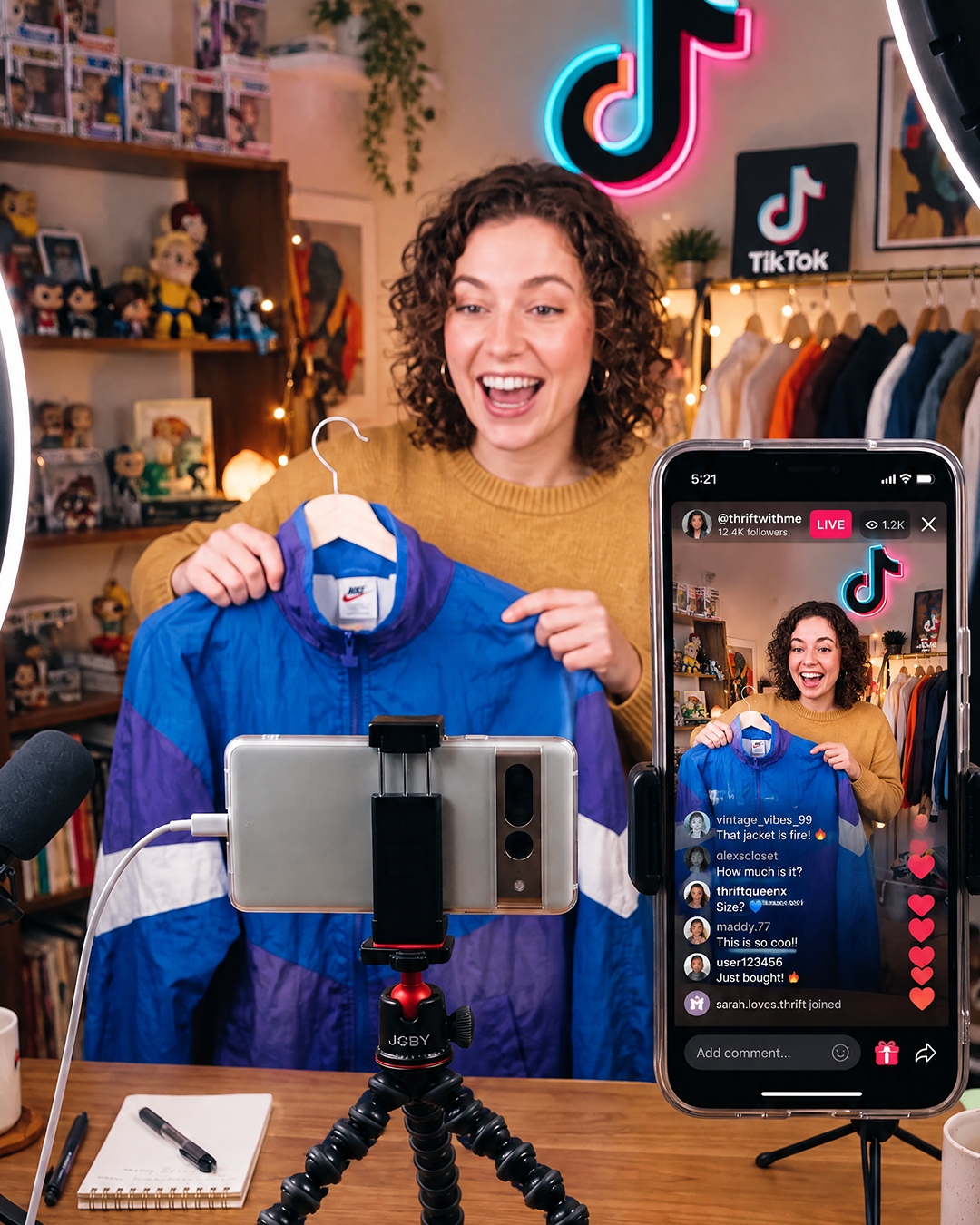
The customer may not be looking for anything at all. They open TikTok or Whatnot to watch something interesting, encounter a product, see it demonstrated, ask questions and potentially purchase it without leaving the experience.
The storefront becomes content.
That distinction matters because businesses are no longer competing only for search rankings, ad clicks or space on a marketplace.
They're competing for attention.
The Numbers Are Starting to Become Significant
CNBC highlighted Beachwaver, a hair-care brand that has generated roughly $1 million through TikTok Shop in 2026, with approximately one-quarter of those sales coming from livestreams.
During one livestream observed by CNBC, the company generated roughly $8,000 during the first four hours.
Then there is QVC.
The company helped popularize televised home shopping decades ago. Now it is reportedly streaming more than 200 hours each week across seven TikTok channels.
That's an interesting evolution.
QVC isn't abandoning the fundamental idea that made its business successful. It's moving that idea to wherever today's audience happens to be watching.
The screen changed. The underlying sales model didn't.
Live Commerce Isn't Just Another Sales Channel
It's tempting to look at live shopping as another place to list products.
That's probably the wrong way to think about it.
A traditional product page is largely static. A livestream can demonstrate the product, answer objections, create urgency, show customer reactions, introduce additional products and respond to questions in real time.
The salesperson, product demonstration, customer service interaction, entertainment and checkout can effectively happen inside the same experience.
That creates a very different relationship between the business and the customer.
It also explains why simply turning on a camera isn't enough.
Successful live commerce requires its own operational infrastructure: hosts, programming, offers, inventory, moderation, customer service, graphics, production, scheduling and an understanding of what keeps viewers watching.
Businesses Don't Need to Become QVC
The takeaway isn't that every business should immediately start livestreaming for hundreds of hours a week.
Live commerce will make far more sense for some products and industries than others.
But there is a larger lesson here.
The distance between content and commerce is getting smaller.
Social platforms increasingly don't just influence what people buy. They can host discovery, education, interaction and the transaction itself.
For businesses that sell products online, that changes the question from:
How do we get someone from social media to our store?
to:
What if the social experience becomes part of the store?
The Next Storefront Might Not Look Like a Store
Websites aren't disappearing. Neither are marketplaces, retail stores or traditional ecommerce.
What's changing is the number of places where a purchase can begin and end.
A customer might discover a product through a creator, watch it demonstrated live, ask a question in the comments and purchase it without ever conducting a search or visiting the brand's homepage.
TikTok's live-shopping sales doubling doesn't mean every business needs to jump into live commerce tomorrow.
But it does provide another signal that content, community and commerce are continuing to converge.
Businesses that understand that shift may find entirely new ways to reach customers before those customers ever start shopping.
Source: CNBC, Sept. 1, 2026.
Read the original CNBC reporting >