Your Next Customer Might Not Be a Person
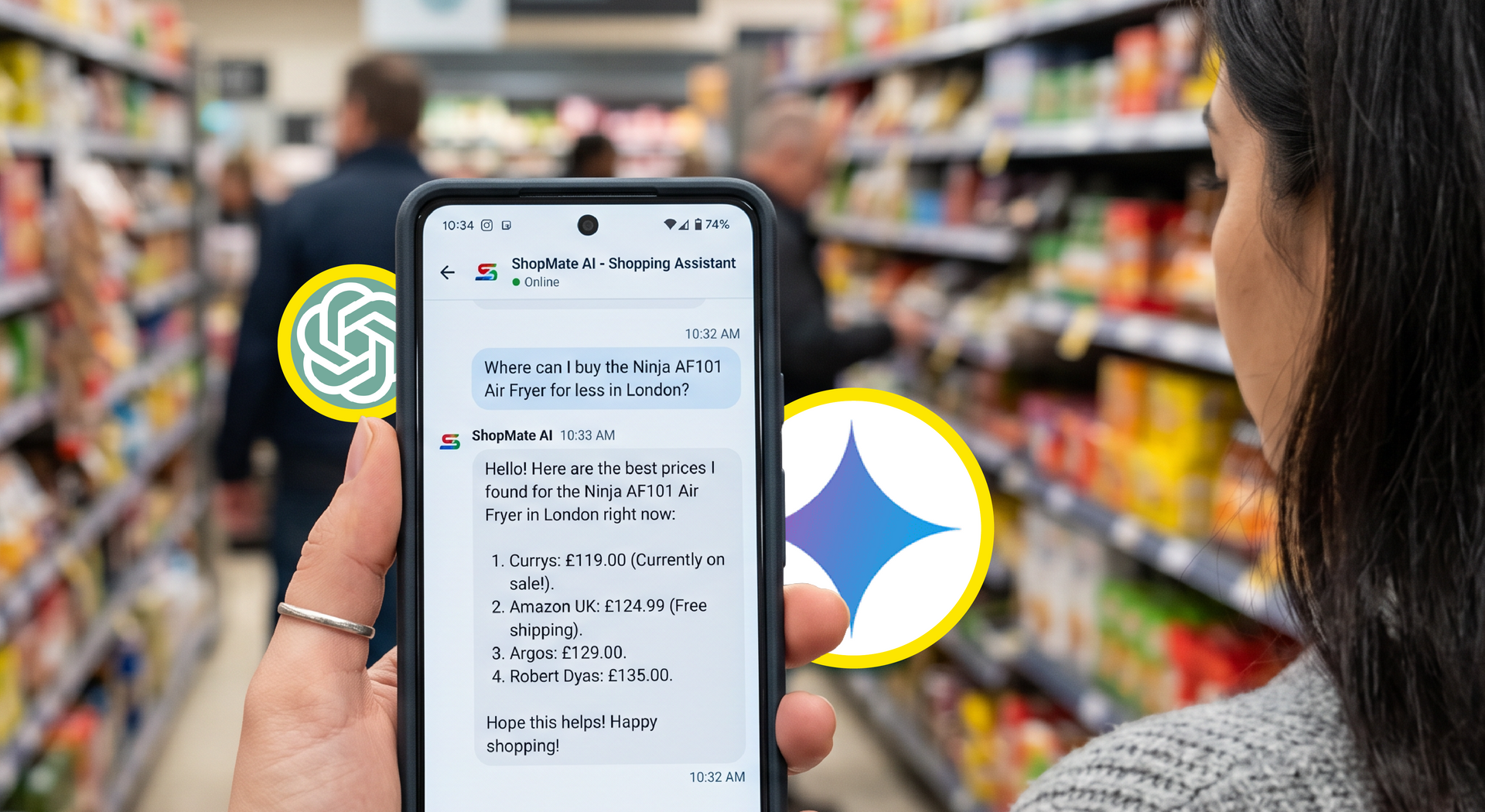
For most of ecommerce history, the process has been straightforward.
A person searches for a product. They compare a few options. They visit a store, read the product page, make a decision and complete the purchase.
AI is beginning to change that process.
A series of recent announcements points toward a different version of online shopping, one where AI doesn't simply recommend what someone should buy. It can search, compare, communicate with businesses and increasingly take action on the customer's behalf.
At the same time, AI is appearing on the other side of the transaction too. Businesses are beginning to use AI agents to monitor ecommerce stores, identify problems and even conduct conversations with customers.
Put those developments together and something interesting starts to emerge:
AI could increasingly operate on both sides of ecommerce.
AI Agents Are Starting to Buy Things
One of the biggest steps toward this future is giving AI the ability to actually complete transactions.
Mastercard's Agent Pay initiative is designed to enable AI agents to make payments on behalf of consumers while maintaining authorization and controls around the transaction.
New integrations are beginning to connect that infrastructure to AI agents. Google and its partners are also developing technology intended to make it easier for AI agents to discover products and transact with participating businesses.
That changes what an AI shopping assistant could eventually do.
Today, you might ask an AI:
“What's the best hiking backpack under $200?”
It can research the question and recommend several options.
The emerging model goes further.
You could tell an AI what you need, your budget and your preferences. The AI could search different stores, compare products, evaluate prices and availability and eventually help complete the purchase.
The customer moves from doing the shopping to describing the outcome they want.
Shopping Could Become a Conversation
This could also change how people discover products.
Traditional ecommerce requires customers to navigate categories, search results, filters and product pages.
AI allows the interaction to begin with a request instead.
“Find me a lightweight laptop under $1,000.”
“I need a birthday gift for a seven-year-old who loves Minecraft.”
“Find running shoes similar to these, but under $150.”
Instead of figuring out which keywords, filters and websites to use, the customer simply explains what they want.
The AI can do more of the searching and comparing.
For businesses, that introduces an entirely different kind of customer journey. A potential buyer may never browse a website the same way a person does. An AI could increasingly become the layer between the customer and the businesses competing for that purchase.
Even Advertising Could Become Conversational
Advertising may change for the same reason.
OpenAI is testing Sponsored Agents that can allow someone to move from an advertisement into a conversation with an AI agent created by the advertiser. The early integrations described include Shopify for ecommerce and HubSpot for CRM.
That's a very different interaction from clicking a traditional digital ad.
Instead of:
Ad → landing page → browse → form or checkout
the experience could increasingly look like:
Ad → conversation → questions → recommendation → action
A customer could ask about availability, specifications, pricing or which product fits their situation without navigating several pages to find the answer.
The advertisement stops being only a doorway to a website. It can become the beginning of the sales conversation.
But AI Isn't Only Appearing on the Customer's Side
This is where the bigger shift becomes more interesting.
While some companies are building AI that shops for customers, others are building AI that works for the businesses selling to them.
Noibu, for example, recently introduced AI agents designed to monitor ecommerce operations, identify problems, diagnose issues, propose fixes and measure the results.
Tasks that traditionally required someone to continuously inspect analytics, identify problems and determine what needed attention can increasingly be assisted by software operating in the background.
That doesn't mean an AI is suddenly replacing an entire ecommerce team.
But it does mean the software businesses use is beginning to move beyond simply reporting what happened.
It can increasingly identify what needs attention and help determine what should happen next.
AI Can Talk to Your Customers Too
Customer research is changing in a similar way.
Marvin recently introduced Live Intercept, which uses AI to conduct customer interviews directly on websites. The system can ask follow-up questions based on someone's responses and conduct conversations across more than 40 languages.
Traditionally, meaningful customer research might require recruiting participants, scheduling interviews, conducting them and analyzing the results.
AI makes it possible for parts of that process to happen continuously.
A business could potentially learn why customers hesitate, what they're looking for or what confused them while those customers are actually interacting with the business.
Again, AI isn't just sitting on the customer's side helping someone shop.
It's sitting on the business side helping the company understand the person shopping.
AI Could Be on Both Sides of the Transaction
Taken individually, these announcements look like separate technology stories.
Payments for AI agents.
Conversational advertising.
Automated ecommerce monitoring.
AI-powered customer interviews.
Taken together, they point toward something bigger.
On one side of a transaction, an AI could search for products, compare options, communicate with sellers and help make a purchase for a customer.
On the other side, another AI could monitor the store, answer questions, analyze customer behavior and help the business improve its operation.
We aren't at a point where this describes everyday ecommerce. People are still browsing websites, comparing products and clicking checkout buttons themselves.
But the infrastructure for something different is being built.
And if these technologies continue developing in the same direction, ecommerce may increasingly involve something that would have sounded strange only a few years ago:
AI doing business with AI.
Sources
Practical Ecommerce: New Ecommerce Tools, September 23, 2026