
How Shapermint Is Building a $10 Million TikTok Shop Business Without Chasing Gen Z

October 8, 2026


How Shapermint Is Building a $10 Million TikTok Shop Business Without Chasing Gen Z
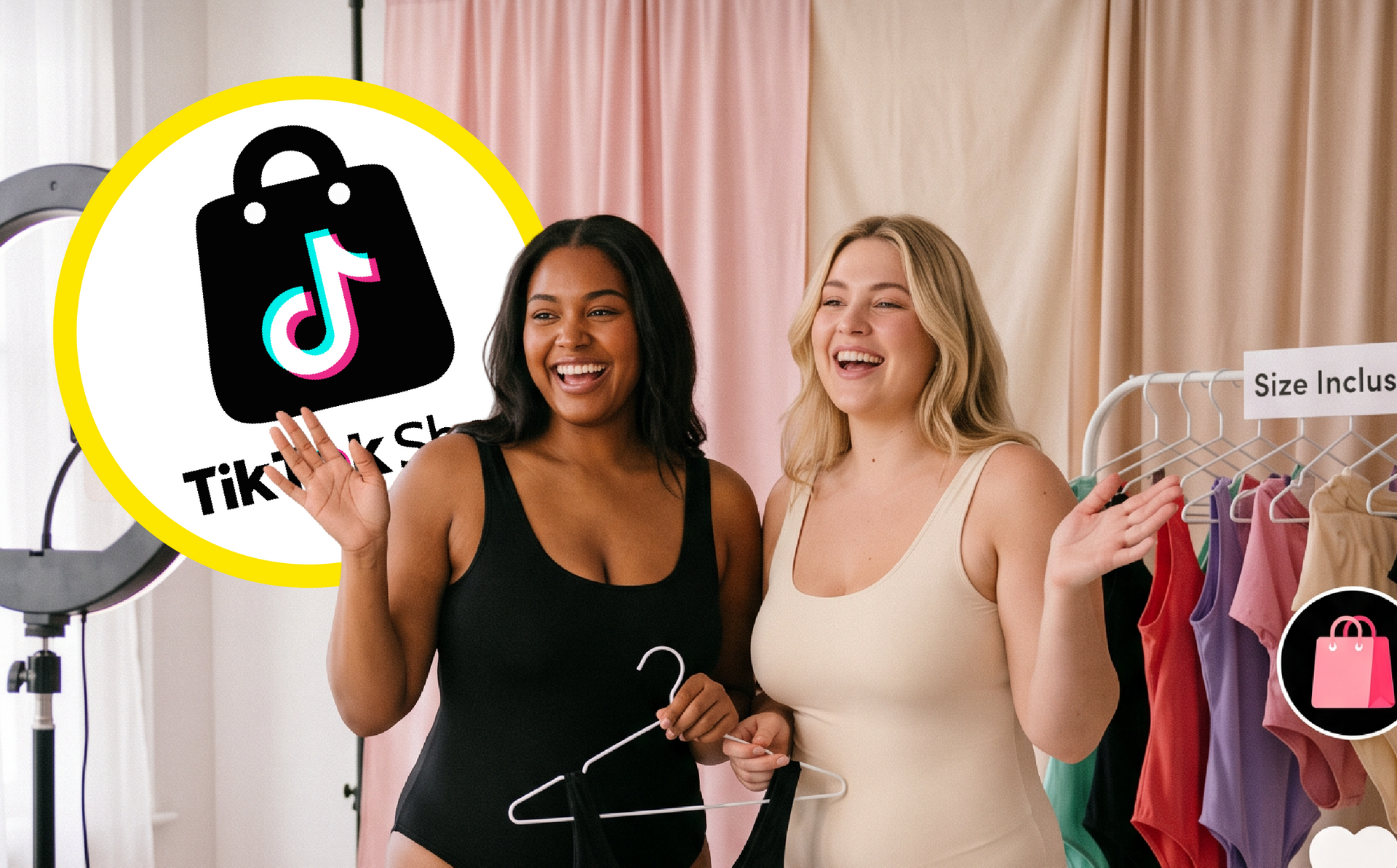

TikTok Shop is often associated with younger consumers, viral trends and creators who know how to capture attention in seconds. But one shapewear brand is demonstrating that the platform's commercial potential extends well beyond Gen Z.


Shapermint, a direct-to-consumer shapewear company primarily serving women between 35 and 65, is on track to generate approximately $10 million in TikTok Shop sales in 2026, according to reporting from Modern Retail.


The company's approach challenges several assumptions about social commerce. Rather than trying to attract a younger audience or relying on a handful of celebrity influencers, Shapermint has built a large network of everyday creators who resemble its customers.


The results offer an interesting example of how brands can combine creator partnerships, high-volume content production and performance analysis to build a scalable sales channel.


TikTok Shop Isn't Just for Younger Shoppers


For businesses considering TikTok Shop, one of the first questions is whether their customers actually use the platform.


It's a reasonable concern, particularly for companies selling products to people over 35. TikTok's reputation has historically been closely associated with younger audiences, and many brands still approach it as a platform dominated by Gen Z.


Shapermint took a different approach.


Its core customer base consists primarily of women aged 35 to 65. Instead of changing its positioning to appeal to younger shoppers, the company focused on finding creators who already connected with its existing audience.


According to the company, 60% of its top-performing TikTok Shop affiliate creators are over 35.


That distinction is important. Shapermint didn't need to reinvent its product or customer profile to participate in social commerce. It needed to identify the communities and creators already reaching the people most likely to buy.


For other businesses, the lesson is that a platform's reputation doesn't necessarily describe every audience that can be reached through it.


From $1.5 Million to a Projected $10 Million


Shapermint's TikTok Shop operation has grown quickly.


The company reported reaching approximately $1.5 million in TikTok Shop sales within the first four months of 2026, with sales increasing by as much as 515% in a single month.

It now expects to generate approximately $10 million through TikTok Shop for the year.


Those figures are particularly interesting because the company isn't relying on a single viral video or a short-term promotional campaign. Its growth strategy involves building an ongoing system for recruiting creators, producing content and identifying what performs.


A viral moment can generate an unexpected spike in sales. A repeatable content and affiliate operation offers a different opportunity: the ability to keep testing, learning and generating new sales opportunities over time.


The Power of 5,000 Creators


One of the most significant parts of Shapermint's strategy is the scale of its affiliate network.

The company works with more than 5,000 active creators through TikTok Shop's affiliate program.


Rather than concentrating its marketing efforts on a small number of high-profile influencers, Shapermint has developed a large community of women who can demonstrate its products in everyday situations.


For shapewear, that approach makes practical sense.


Customers want to understand how a product fits, whether it's comfortable, how it looks under clothing and whether it stays in place during normal activities. Those questions can be difficult to answer through traditional product photography.


A creator demonstrating a product at home can show details that a polished advertisement might overlook.


When the creator also resembles the customer, the demonstration becomes more relatable. Viewers can see how the product might work for someone with a similar body type, lifestyle or set of concerns.


The value isn't necessarily celebrity influence. It's relevance and credibility.


More Than 20,000 Videos and Thousands of Opportunities to Learn


Shapermint's creator network also produces an extraordinary volume of content.


According to the company, its creators have generated more than 20,000 TikTok videos since January 2026, including more than 5,000 in a recent 30-day period.

That volume creates a major advantage beyond simply increasing the number of people who might see the brand.


It gives Shapermint thousands of opportunities to discover which demonstrations, messages, creators and product features actually influence purchasing decisions.


One video might succeed because it shows how a product fits under a particular outfit.

Another might perform better because it addresses a common concern about comfort. A third might generate sales because the creator explains a specific problem the product solves.


Instead of trying to predict the perfect creative approach in advance, the company can observe what customers respond to across a large body of content.


For smaller businesses, producing thousands of videos may be unrealistic. But the underlying principle is transferable: test multiple approaches, measure their results and use the findings to guide future content.


The Best Content Doesn't Always Look Like Advertising


Traditional advertising often emphasizes polished production, carefully written scripts and tightly controlled brand messaging.


Shapermint's affiliate strategy demonstrates the value of a different kind of content.

Its creators frequently show products in their homes while going about normal activities.

They demonstrate fit, comfort and functionality in situations that potential customers recognize.


This approach allows content to serve several purposes at once.


It introduces the product, provides a demonstration, addresses purchasing concerns and gives viewers an opportunity to see the product on someone they may relate to.


The result can be more useful than a conventional promotional message.


This doesn't mean production quality or brand consistency no longer matters. It means that for certain products, authenticity and practical demonstrations can be more persuasive than highly produced advertising.


Shapermint Studies What Works, Then Repeats It


Producing a large amount of content is only one part of Shapermint's strategy.

The company also analyzes its strongest-performing creators, the videos they publish and the messages they use.


Those findings are shared with its creator community through weekly creative briefs, helping other affiliates understand which approaches have been generating results.


This creates a feedback loop.


Creators publish content. Shapermint studies the performance. The company identifies successful approaches and shares them with the wider network. More creators can then test variations of those approaches.


Over time, the company develops a clearer understanding of what motivates its customers to purchase.


That process is what makes the case study particularly relevant to other businesses.


The strategy isn't simply to recruit more influencers or produce more videos. It's to connect content production with actual sales performance and use that information to improve the next round of content.


What Other Businesses Can Learn From Shapermint


Not every business has the resources to build a network of 5,000 creators, and not every product category will perform the same way on TikTok Shop.


But Shapermint's approach highlights several principles that apply well beyond shapewear.


First, businesses shouldn't automatically dismiss a platform because its perceived audience seems different from their target customer. It's worth investigating whether relevant communities and creators already exist there.


Second, creator selection should prioritize audience alignment over follower counts alone. A smaller creator who reaches the right buyers may offer more commercial value than a much larger account with an unrelated audience.


Third, product demonstrations can do more than generate awareness. They can answer questions, reduce uncertainty and help customers make purchasing decisions.


Finally, content should be treated as something a business can continuously test and improve. Understanding which messages actually lead to sales is more valuable than simply accumulating views.


Find Your Audience on the Platform


Shapermint's projected $10 million in TikTok Shop sales is an impressive figure, but the more useful story is how the company is working toward it.


It didn't abandon its established customer base to pursue a younger demographic. It found creators who matched the people already buying its products, developed a large-scale content operation and used performance data to guide what happened next.


That approach offers a useful perspective for any business exploring social commerce.


You don't necessarily need to change your audience to fit a platform.


You need to find your audience on the platform, understand what influences them and build a repeatable way to reach them.


Source: Modern Retail, Shapermint is on track to hit $10M in TikTok Shop sales by targeting women ages 35–65


https://www.modernretail.co/marketing/shapermint-is-on-track-to-hit-10m-in-tiktok-shop-sales-by-targeting-women-ages-35-65/

October 26, 2026
Marketing is becoming more technical. As businesses adopt AI tools, automation and increasingly complex software, a new kind of specialist is emerging: the marketing engineer. For years, businesses have built marketing teams around familiar responsibilities: advertising, content creation, search engine optimization, social media and lead generation. Those responsibilities haven't disappeared. But the technology behind them has become increasingly complicated. Businesses now rely on advertising platforms, customer relationship management systems, email automation, website analytics, e-commerce software and AI tools. Making those systems work together is becoming an important part of marketing performance. That's where the marketing engineer comes in. What Is a Marketing Engineer? A marketing engineer combines marketing knowledge with technical skills. Traditional marketing specialists might develop a campaign strategy, create content or manage advertising budgets. A marketing engineer can help build the technical systems that make those activities more effective. That might involve connecting a CRM to advertising platforms, automating reporting, improving conversion tracking, integrating customer data or developing workflows using APIs and AI tools. The role connects marketing strategy with technical execution. Rather than relying entirely on separate developers, analysts and software specialists, businesses can use technical marketing expertise to bridge those functions. The Problem With Disconnected Marketing Systems Many businesses already have the technology they need. The challenge is getting it to work together. A company might use Google Ads to attract customers, Shopify to process orders, Klaviyo for email marketing and a CRM to manage relationships. Each platform collects information, but that doesn't necessarily mean the information is connected. Employees may still need to download reports, transfer leads between systems, update spreadsheets or manually compare campaign results against actual sales. Those disconnected processes can make marketing slower and more difficult to measure. Marketing engineering focuses on improving the connections between systems. When information moves reliably between platforms, businesses can reduce repetitive work and make decisions using more complete data. AI Search Is Changing How Businesses Get Discovered Technical marketing is also becoming more relevant as AI-powered search develops. Traditional search engine optimization focuses on helping websites appear in organic search results. But customers increasingly use AI-powered tools to research products, compare services and find answers. That has brought greater attention to two related concepts. Answer Engine Optimization (AEO) focuses on making information clear, accessible and useful for answer-based discovery. Generative Engine Optimization (GEO) focuses on improving how content can be discovered, understood and potentially referenced by generative AI systems. These approaches overlap with established SEO practices, including technically accessible websites, useful content and clear information architecture. They do not guarantee inclusion in AI-generated answers. For businesses, the practical lesson is that website content and technical structure need to support more than traditional search rankings. Automation Can Eliminate Repetitive Marketing Work Another opportunity is workflow automation. Marketing departments often spend considerable time on tasks that don't require much creative judgment. Downloading reports, updating spreadsheets, transferring customer information, preparing campaign summaries and moving data between applications are common examples. Many of these activities can be automated when systems are properly connected. That doesn't eliminate the need for marketers. It can give them more time to focus on strategy, creative development, customer relationships and improving campaign performance. The objective isn't to automate everything. It's to identify which tasks can be handled more reliably and efficiently through technology. Better Data Can Lead to Better Marketing Decisions One of the biggest challenges in marketing is understanding which activities actually contribute to revenue. A campaign might generate thousands of impressions, hundreds of clicks and dozens of leads without producing profitable customers. Marketing engineers can help businesses connect advertising activity with customer and sales information. That includes improving conversion tracking, integrating data sources and identifying where potential customers drop out of the buying process. The goal is to move beyond reporting what happened on an advertising platform and develop a clearer understanding of what happened across the business. Does Your Business Need a Marketing Engineer? Not every company needs to hire a full-time technical marketing specialist. For smaller businesses, the first step is identifying where disconnected systems, manual processes or unreliable data are creating problems. Consider whether your advertising and sales platforms share information, whether campaign performance can be connected to revenue and whether repetitive reporting tasks could be automated. It is also worth reviewing whether your website is technically accessible, well structured and capable of answering the questions potential customers are asking. Depending on the complexity of the business, these improvements might be handled by an internal employee, an outside specialist or a combination of both. The important decision isn't necessarily who to hire. It's determining which capabilities the business actually needs. The Future of Marketing Is More Connected Creative thinking, compelling messaging and customer relationships remain essential to effective marketing. But those strengths increasingly depend on the technology supporting them. Businesses need systems that communicate, data that can be trusted and processes that allow teams to work efficiently. Marketing engineering represents one approach to bringing those capabilities together. The next competitive advantage may not come from producing more content or launching more campaigns. It may come from building a marketing operation where everything works together.
October 23, 2026
Procter & Gamble didn't simply outsource its support operations. It first rebuilt how they worked, then brought in outside partners. By 2008, its business-services transformation had generated approximately $600 million in cumulative savings. In the late 1990s, Procter & Gamble faced a problem familiar to businesses of almost every size: too many teams performing similar work. Finance, human resources and other support functions were spread across different parts of the company. That meant duplicated activities, inconsistent processes and unnecessary costs. Instead of continuing to expand those departments independently, P&G decided to fundamentally change how its business operated. First, P&G Fixed Its Internal Operations In 1999, P&G began bringing its support functions into a single global organization. Over the following three years, the company consolidated and standardized more than 70 services. It also established shared-service centers to support operations around the world. The goal was to replace fragmented systems with a more consistent and efficient operating structure. Importantly, P&G didn't begin by handing all these functions to outside companies. It first reorganized how the work was performed internally. That foundation would make the next phase possible. Then Came $4.2 Billion in Outsourcing Agreements In 2003, P&G entered into outsourcing partnerships valued at approximately $4.2 billion. Outside specialists took responsibility for selected operations, including IT infrastructure, payroll support, accounts payable and facilities management. Rather than maintaining every capability internally, P&G could rely on partners with specialized expertise, established systems and the scale to manage these activities. But it didn't outsource everything. The company retained control of functions it considered strategically important, including procurement, logistics, IT architecture and technology-driven innovation. This distinction was central to the strategy. P&G wasn't trying to eliminate internal operations. It was deciding which activities made sense to manage itself and which could be handled more effectively by partners. The Benefits Went Beyond Cost Savings One of the clearest examples came during P&G's integration of Gillette. According to P&G's business-services leadership, its established systems and outsourcing partners helped the company mobilize approximately 750 additional people within weeks. The business-services integration was completed in 15 months, a process its leadership believed could otherwise have taken three to four years. That flexibility mattered. P&G could draw on existing capabilities and outside resources without having to build every part of the operation from scratch. By 2008, the company's broader business-services transformation had produced approximately $600 million in cumulative savings. Those savings came from a combination of internal consolidation, standardized processes and selective outsourcing, not outsourcing alone. What Smaller Businesses Can Learn Most businesses aren't managing P&G's scale or negotiating multibillion-dollar agreements. But the underlying decision is surprisingly relevant. As companies grow, they often add employees and departments without reconsidering how work gets done. Over time, the same problems can emerge: duplicated tasks, fragmented responsibilities, rising administrative costs and employees spending too much time on activities outside their core expertise. The first step isn't necessarily outsourcing. It's understanding the operation. Which processes are inefficient? Which functions require direct internal control? Which activities could a specialist handle more effectively? Customer support, bookkeeping, administrative work, creative production and certain technology operations may be candidates for outside support, depending on the business. But outsourcing a poorly defined process can simply transfer the problem to someone else. P&G's experience illustrates a more disciplined approach: improve the system, identify which capabilities are strategically important and use external partners where they offer a genuine advantage. You Don't Have to Build Everything In-House The most important lesson from P&G's transformation isn't that every business should outsource more. It's that growth doesn't require owning and managing every operational function. By combining stronger internal processes with carefully selected partners, businesses can reduce unnecessary complexity and concentrate their resources where they create the most value. Sometimes the smartest way to grow isn't to build another department. It's to rethink how the work gets done. Sources McKinsey & Company, From internal service provider to strategic partner: An interview with the head of Global Business Services at P&G (2008). Procter & Gamble, 2008 Annual Report.